

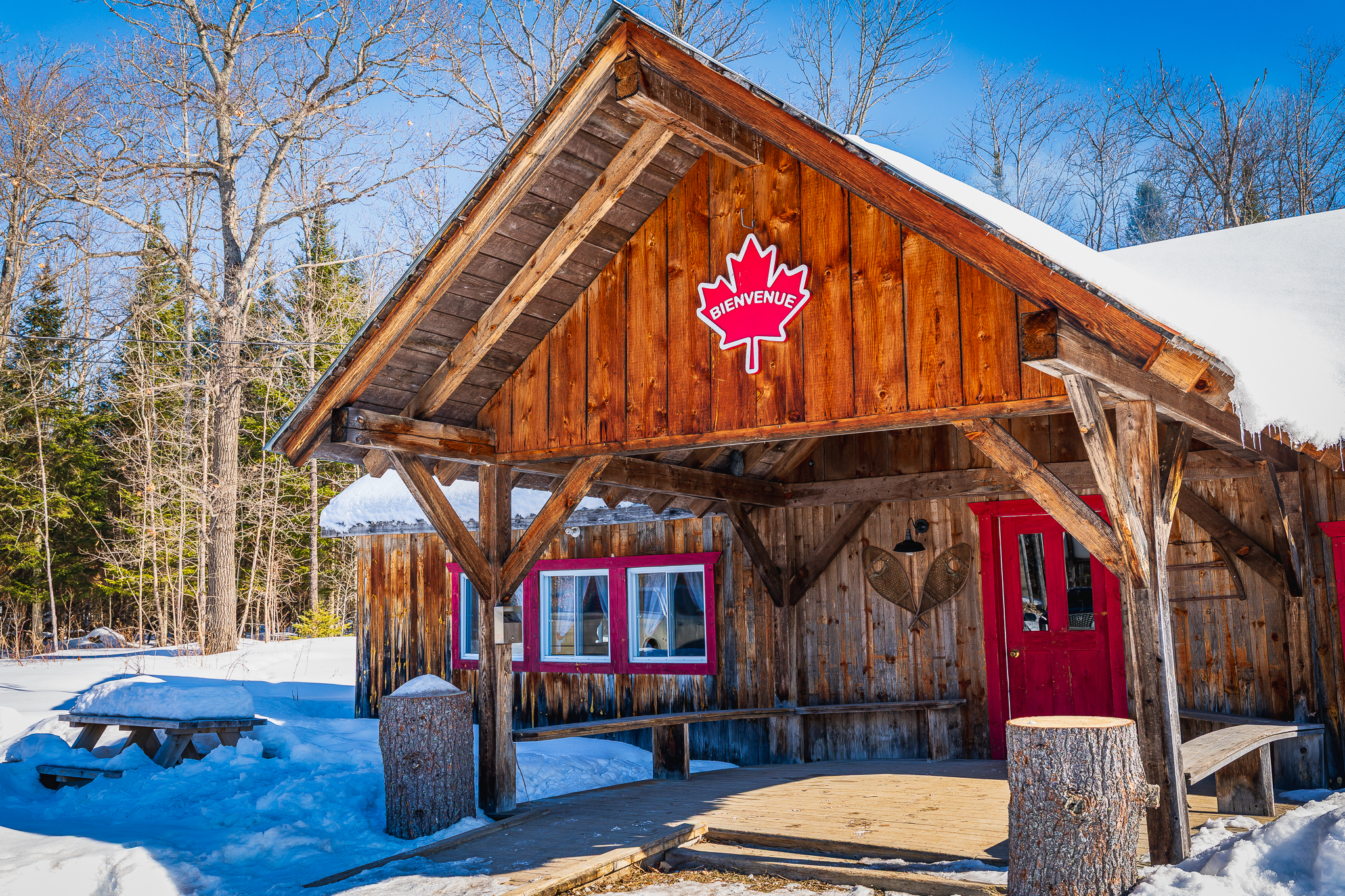
When traveling across the Outaouais, it’s hard not to notice the vastness of the forests that blanket the region. Wooded hills, fertile valleys, rivers winding between maple stands… everything here seems shaped for the maple.
Located in southwestern Quebec, the Outaouais region spans more than 33,000 km² and includes four regional county municipalities (MRC) as well as the City of Gatineau. The greater Gatineau-Ottawa area brings together nearly 1.3 million consumers. This proximity to a large population base is a valuable advantage for the region’s agri‑food producers.
Agriculture naturally developed in the valleys of the Outaouais, Gatineau, and Petite‑Nation rivers. The diversity of soils, the quality of the water, and the region’s climatic variations create a rich environment for many types of agricultural production. But in spring, it is the maple that steals the spotlight.
Maple, a Living Wealth
For several years now, maple production has been taking on an increasingly important role in the agricultural landscape of the Outaouais. New businesses are emerging, while others continue to expand their sugarbushes.
Key Figures of Maple Production in the Outaouais
• 33 456 km²
Total area of the Outaouais region.
• 4 MRC and City of Gatineau
The territory includes the MRC of La Vallée‑de‑la‑Gatineau, Les Collines‑de‑l’Outaouais, Papineau, Pontiac, and the City of Gatineau.
• Nearly 1,3 million consumers
The proximity of the Gatineau-Ottawa market is a major advantage for the region’s agri‑food producers.
• A growing industry
The number of businesses reporting maple‑related activities in the region has risen from just over 40 in the early 2010s to nearly 60 today.
• More than 2,5 millions dollars
The approximate value of revenues generated by maple production in the Outaouais in 2025.
In the MRC of La Vallée‑de‑la‑Gatineau, Les Collines‑de‑l’Outaouais, Papineau, and Pontiac, sugarbushes are quietly shaping the landscape. Each spring, when cold nights and milder days follow one another, the sugaring season brings with it a very particular kind of excitement.
Sugarbushes Still Full of Promise
While many sugarbushes are already being tapped, a large portion of the forested territory still holds significant potential for maple production. Over the years, various studies and initiatives have helped deepen our understanding of the richness of these forests and identify areas where maple production could continue to grow.
With this in mind, the Quebec government has undertaken work to identify priority sugarbushes on public lands in order to support the development of new maple‑related projects.
This approach aims to better showcase a resource that is an integral part of Quebec’s identity, while ensuring a balance with other uses of the forest.
A Tradition That Continues to Grow
Between its vast maple forests, rolling landscapes, and the passion of the producers who work there, the Outaouais has everything it needs to keep maple production thriving for years to come.
Because behind every sugarbush lies a story: that of women and men who harvest sap with the rhythm of the seasons and who carry forward a know‑how deeply rooted in this land.
And indeed, several maple producers in the Outaouais are keeping this tradition alive today… each in their own way.
References
- Portrait agricole de la région de l’Outaouais.
- Potentiel acéricole : une consultation publique en cours en Outaouais.
- Formulaire d’enregistrement des exploitations agricoles (ministère de l’Agriculture, des Pêcheries et de l’Alimentation – 2010 à 2025)
- Ministère des Forêts, de la Faune et des Parcs (MFFP). Rapport de suivi des consultations publiques 2021 : Potentiel acéricole à prioriser en Outaouais.
- Forget, É., Doyon, M. et al. (2002). Évaluation du potentiel acéricole pour l’Outaouais. Université du Québec en Outaouais.